
See the vehicle and tools discussed, a preparation checklist, timestamped video sections and caption transcript. Open the repair sheet →
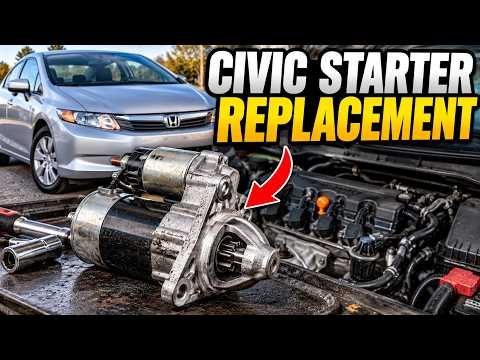
A click, a slow crank and an engine that turns over normally but will not start are different observations. They should not all lead automatically to the same parts order. The Southsideboystyle Civic video shows starter replacement with hands-on repair footage; these notes help you decide what to establish before following that job.
Describe exactly what happens
Start with the simplest question: does the engine turn over when you try to start it? If it does not turn over, describe any click or other response. If it turns slowly, record that. If it turns at its normal speed but does not run, write “cranks but will not start.” These descriptions keep separate problems from being grouped together as a bad starter.
Note whether the fault happens every time or only sometimes. Record whether it is associated with a hot engine, a cold morning or a long period parked. Do not repeatedly operate the starting system while trying to force an answer; use the vehicle’s operating instructions and seek help if you are uncertain.
Check the basics before buying a part
The video description specifically calls out the battery, terminals, cables, grounds and starting circuit as checks that come before condemning the starter. A starter relies on the rest of that system. A battery or connection problem can produce symptoms that sound convincing in a short video but still need their own diagnosis.
A visual look is useful, but it is not the same as testing a circuit under the conditions that produce the fault. If you do not have the equipment or experience to test safely, a diagnostic appointment may be a better next step than another replacement part. The aim is to identify the fault, not simply to install the most likely-looking component.
Match the video to your car
The published video description identifies 2012–2015 Civic 1.8L models with the matching starter configuration. Check the actual vehicle, engine, transmission and part application before starting. A year range in a title is a way to find relevant footage; it does not replace a parts catalogue or service procedure for your VIN.
Watch through the access and removal portion first. Decide whether you have enough room, the correct tools and the ability to complete the work safely. Photograph the existing arrangement before dismantling it, and keep removed hardware organised. Do not improvise a torque figure or assume a replacement’s connections are correct just because it fits in the space.
Follow the vehicle’s battery-disconnection procedure before servicing starter connections. If the job requires lifting the vehicle, use suitable rated support at the specified points. Never work underneath a vehicle supported only by a jack.
Define what “fixed” will mean
Before the repair, write down the symptom and the evidence that led to the diagnosis. After the work, check that the original starting complaint is resolved and that connections and removed components have been correctly restored according to the service procedure. An intermittent problem deserves a follow-up under the conditions that originally caused it.
If starters have been replaced repeatedly, keep that history. Record the dates, part numbers, any tests already performed and what changed after each replacement. Repetition is a reason to reassess the whole starting system, rather than proof that every replacement part was defective.
The video below is the shortened re-edit of the original repair. Use it to see the work, and use the correct service information to determine specifications. Ask questions in the video comments with your year, engine and exact symptom so the discussion starts with useful details.
THE ORIGINAL CHANNEL VIDEO
 WATCH THE VIDEO
Video by Melvin / Southsideboystyle. This article is an editorial companion; vehicle-specific procedures and the actual repair demonstration remain in the source video and applicable service information.
Save this note in your browser, print it for the garage, or ask a question in the linked video’s comments.
← More repair notes