
See the vehicle and tools discussed, a preparation checklist, timestamped video sections and caption transcript. Open the repair sheet →
The combination is confusing: an Engine Hot / A/C Off message appears, the air conditioning stops, and the temperature gauge may sit at cold instead of showing a clear answer. The Southsideboystyle video documents a temporary workaround on a Chevrolet Impala. This guide puts that video in context so the workaround does not become the whole diagnosis.
If the engine may be overheating, stop safely, shut it off and investigate before driving further. Do not open a hot pressurized cooling system. A reset does not repair an overheating engine.
Record the problem before clearing anything
A warning that disappears can take useful information with it. Before trying a reset, write down the model year and engine, when the problem began, what the gauge did, whether the fans were running and whether there were other symptoms. If a scan tool is available, save the exact diagnostic trouble codes and any available freeze-frame information before clearing them.
Make the description specific. “The gauge stayed cold after the warning came on during the drive home” tells a clearer story than “the car overheats.” Record whether you actually observed evidence of overheating or only saw the warning. That distinction helps a technician decide what needs checking; it is not a reason to ignore the warning.
What a temporary workaround can—and cannot—tell you
A change after a reset is an observation. It may tell you the message and gauge behaviour can change, but it does not identify the failed component. If the warning returns, record how long it took and the driving conditions. If it does not return immediately, keep that observation separate from a claim that the underlying fault has been repaired.
Resist the temptation to keep repeating a reset just to make the dashboard look normal. A reliable temperature indication and a properly functioning cooling system matter more than a clear display. Treat the video as a record of one experience, not permission to keep driving a vehicle with an unresolved heat warning.
Use the symptoms to narrow the investigation
The video description identifies several possible areas: the coolant-temperature sensor and its wiring, thermostat operation, coolant level and cooling-system faults, and electrical or control issues. These are possibilities, not a shopping list. Replacing a sensor because another owner had a similar message may leave your own problem unchanged.
The useful next step is to compare the warning, scan information and physical findings using the service information for the exact vehicle. A code describes a detected condition; it does not prove that the part named in a search result is defective. If the gauge cannot be trusted, do not use its cold position as proof that the engine is safe.
A simple repair log
- Before: year, engine, warning text, gauge behaviour and saved codes.
- During: what was inspected or tested, and what the results were.
- After: what changed, whether the warning returned and whether the diagnosis was confirmed.
Once a cause has been established, use the manufacturer’s procedure and specifications for that engine. This article deliberately does not supply guessed torque values, coolant specifications or a universal sensor-replacement sequence.
Watch the original video below for the actual demonstration. If you share your experience in its comments, include your model year, engine and confirmed findings. That is much more helpful to the next owner than reporting that a reset worked for a few minutes.
THE ORIGINAL CHANNEL VIDEO
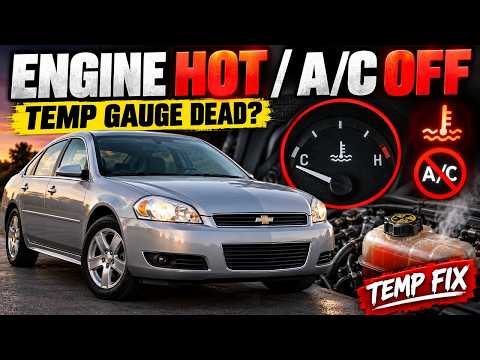 WATCH THE VIDEO
Video by Melvin / Southsideboystyle. This article is an editorial companion; vehicle-specific procedures and the actual repair demonstration remain in the source video and applicable service information.
Save this note in your browser, print it for the garage, or ask a question in the linked video’s comments.
← More repair notes